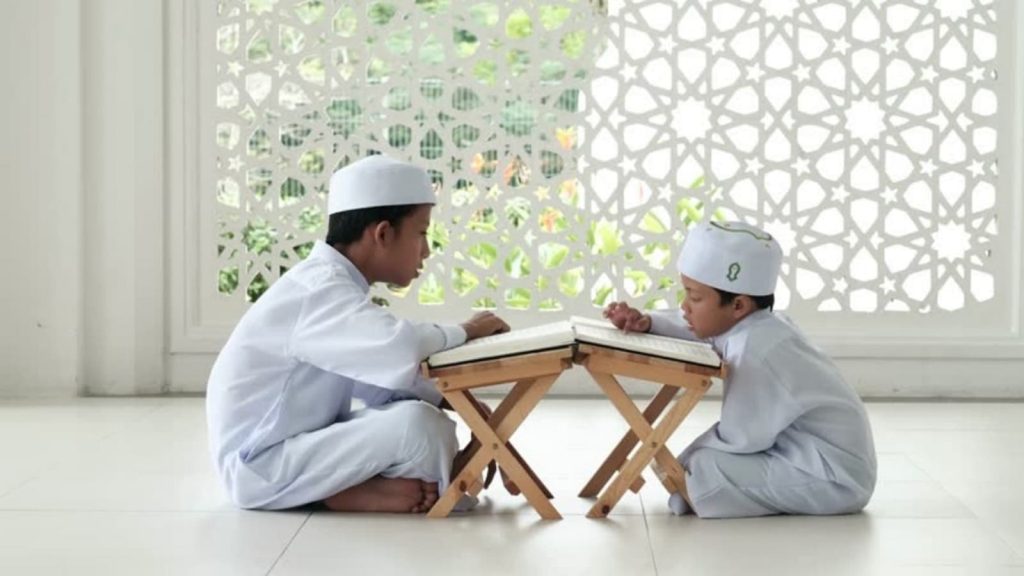
Education in Islam A study of the concept of Islamic education, its relationship to instruction, training, and cultural formation, and its objectives, characteristics, and fundamental axes.
Definition of Education
Education, linguistically: “The root meaning of education has three senses:
The first: raba yarbu, meaning: to increase and grow.
The second: rabiya yarba, on the pattern of khafiya, yakhfa; its meaning is: to arise and mature.
The third: rabba yarubbu, on the pattern of madda yamuddu, meaning: to rectify and take charge of a matter. Al-Baydawi said in his commentary: al-rabb originally means education, namely bringing a thing to its perfection gradually; then Allah Most High was described with it for emphasis. As for al-Raghib al-Isfahani, he said in his book Al-Mufradat: al-rabb originally means education, which is bringing a thing forth stage by stage until it reaches completion.”
Education, technically, is: “the optimal method for dealing with human nature through direct guidance by speech and indirect guidance by example, according to a specific method and specific means, in order to bring about change in the human being toward what is better.”
It is also: “an experience that affects behavior; knowledge is its cognitive tributary, training is its skill-based tributary, and stimulation or emotion is its spiritual and affective tributary. It is the foundation of cultural formation, and behavior is everything that proceeds from the individual in a regular manner.”
It is also: “a purposeful process and a flexible, developing art governed by rules and laws, aiming to form good habits by making use of instincts and inclinations to achieve this goal through guidance and training.”
It is also: “a deliberate, purposeful change in some or all aspects of the human personality by giving it varied and meaningful experiences through a curriculum.”
Education and Its Relationship to Instruction, Training, and Cultural Formation
Instruction
It is every form of knowledge supported by evidence, yet it remains within the sphere of knowledge and does not affect behavior. As long as knowledge remains within the sphere of information and does not move beyond it into the sphere of influencing behavior and conduct, it is wrong to call mere learning and study education.
Training
It is role-playing, drawing out latent competencies and personal capacities, and reaching the highest level of mastery so that work is performed in the least time, with the least effort, and in the best form. Training is therefore one of the tributaries of education and is considered one of the important paths for acquiring skill-based experience.
Cultural Formation
It is the acquisition of qualities, not merely the acquisition of information. The process of culturally forming the Muslim person means preparing him to enter the surrounding societies so that he influences them in a praiseworthy way and is not influenced by them in a blameworthy way. This can be achieved only through education.
The Aim of Education
Objectives of Islamic Education
Dr. Ali Abd al-Halim says: “The objectives of Islamic education, or the ends it seeks to reach, are in general terms: everything that enables the human being to live a sound and upright worldly life and an afterlife that pleases Allah, Glorified be He, and leads to His reward and good pleasure. They are represented in the following points:
First: worshiping Allah alone according to what He has legislated. He, Glorified be He, has said: {the jinn and humankind except that they worship Me} (Al-Dhariyat: 56).
Second: vicegerency on earth. He, Glorified be He, has said: {I am placing upon the earth a vicegerent} (Al-Baqarah: 30). What follows from this vicegerency is the necessity of cultivating the earth and benefiting from the good things Allah has placed in it for humankind. He, Glorified be He, has said: {He brought you forth from the earth and settled you in it} (Hud: 61).
Third: mutual acquaintance among people. He, Glorified be He, has said: {O humankind, We created you from a male and a female and made you peoples and tribes so that you may know one another} (Al-Hujurat: 13).
Fourth: stewardship of the earth and establishment within it. Allah Most High said: {Allah has promised those among you who believe and do righteous deeds that He will surely grant them succession in the earth as He granted succession to those before them, and that He will surely establish for them their religion which He has approved for them, and that He will surely replace their fear with security} (Al-Nur: 55).
Fifth: judging by the Sharia. Allah Most High said: {Then We placed you upon a way of the command, so follow it} (Al-Jathiyah: 18). And He said: {And judge between them by what Allah has revealed, and do not follow their desires; and beware of them lest they tempt you away from some of what Allah has revealed to you} (Al-Ma’idah: 49).”
Characteristics of Islamic Education
1- God-Centered
Imam al-Banna says: “As for its being God-centered, that is because the foundation around which all our aims revolve is that people come to know their Lord and draw from the abundance of this connection a noble spirituality that elevates their souls beyond the rigidity and denial of lifeless materialism to the purity and beauty of virtuous humanity.”
2- Comprehensive, Integrated, and Balanced
It arises from the integration of the Islamic method in providing the Muslim person with all the aspects needed for the well-being of this world and the next. It also arises from our belief in the comprehensiveness, integration, and balance of the Islamic method; we accept Islam only in its comprehensiveness and universality. Likewise, it reflects the harmony and balance of formation in knowledge, rational conception, spirit, inward feeling, conduct, and practical behavior. It approaches matters with moderation, restraint, and balance: neither excess nor negligence, neither inclining to one aspect at the expense of another nor exaggerating one matter over another.
3- Gradual
وهذا ينبع من إيماننا بأن التدرج سنة من سنن الله في الكون فإن «المنبت لا أرضًا قطع ولا ظهرًا أبقى» [رواه البزار]، فتنتقل في خطواتها ومراحلها التغيرية وفق معايير متدرجة، ووفق خطوات مدروسة ومرسومة وواضحة المعالم، لا تتعجل النتائج، ولا تستبق الأحداث، ولا تتجاوز درجات السلم التربوي للتغيير المنشود، فمن استعجل الشيء قبل أوانه عوقب بحرمانه.
This stems from our belief that gradualism is one of Allah’s laws in the universe, for “the overzealous traveler neither crosses the land nor spares the mount” [narrated by al-Bazzar]. Thus, in its transformative steps and stages, it proceeds according to gradual criteria and according to carefully studied, planned, and clearly defined steps. It does not rush results, anticipate events, or overstep the rungs of the educational ladder toward the desired change. Whoever hastens a thing before its time is punished by being deprived of it.
4- Collective and Organized
ففي بيعة العقبة الثانية قال رسول الله ﷺ للأنصار: «أخرجوا إليَّ منكم اثني عشر نقيبًا يكونوا على قومهم كفلاء ككفالة حواري عيسى بن مريم لقومهم»، إنه النظام في العملية التربوية: «مَا مِنْ ثَلاثَةٍ فِي قَرْيَةٍ وَلا بَدْوٍ لا تُقَامُ فِيهِمْ الصَّلَاةُ إِلا قَدْ اسْتَحْوَذَ عَلَيْهِمْ الشَّيْطَانُ فَعَلَيْكُمْ بِالْجَمَاعَةِ فَإِنَّمَا يَأْكُلُ الذِّئْبُ الْقَاصِيَةَ».
At the second pledge of al-Aqabah, the Messenger of Allah said to the Ansar: “Bring out to me from among you twelve chiefs who will be guarantors over their people, as the disciples of Jesus son of Mary were guarantors over their people.” This is order within the educational process: “There are no three people in a village or in the desert among whom prayer is not established except that Satan has gained mastery over them. So adhere to the community, for the wolf only devours the stray one.”
5- Dynamic
It is a call to hope and effectiveness. It is based on searching for the positive qualities of the self, beginning with them, focusing on them, seeking to develop them, imparting a spirit of constructive positivity and fruitful interaction, and spreading the spirit of hope within souls.
6- Continuous
It begins with the true birth of the human soul and then extends with that soul in a continuous, orderly journey until death. It is an educational process that does not stop: {And worship your Lord until certainty comes to you}.
7- Idealistic and Realistic
In its course, it follows the divine norms in dealing with the human soul, recognizing that this soul has constituents, qualities, feelings, and sensitivities that must be taken into account. It deals with the whole human being and acknowledges the natural differences among individuals.
Axes of the Educational Process
The axes of the educational process are four:
First: The Educator
وهو المسئول الأول عن نجاح العملية التربوية وتحقيق أهدافها، وعن رعاية مَن معه في الصف، وهو منهم بمنزلة الوالد بعاطفته وعنايته بشئونهم الحياتية والشخصية، وكان رسول الله ﷺ يقول: «إنَّما أنا لكم بمنزِلةِ الوالِدِ أُعَلِّمُكم …».
He is the first person responsible for the success of the educational process and for achieving its objectives, and for caring for those who are with him in the ranks. In relation to them, he is like a father in his affection and his concern for their life and personal affairs. The Messenger of Allah used to say: “I am only to you like a father; I teach you…”
In relation to them, he is like the shaykh who attends to their faith and conduct; like the teacher who attends to their intellectual and scholarly level; and he is the exemplary leader who offers an example through himself.
The educator is the cornerstone of the educational process. He educates those with him according to Allah’s method, and this was originally the mission of the prophets: {Just as We sent among you a messenger from yourselves who recites Our signs to you, purifies you, teaches you the Book and wisdom, and teaches you what you did not know}.
Second: The Individual
He is the first building block in society. If this building block is sound, the whole structure of society becomes sound. Whoever studies the history of calls and movements finds that they always begin with an individual. The messenger or prophet would begin with himself as an individual, then call individuals and educate them under his direct care. He would transform the abstract idea into men who move with it, live for it, strive for its sake, and die for it. The Muslim’s mission is a mission of change, and it is difficult and demanding; therefore, the preparation of the Muslim individual must be proportionate to the weight of the responsibility.
Third: The Educational Environment
The educational environment is the climate that the educational process is keen to provide, represented by a set of values, ideas, concepts, feelings, and attitudes so that the educational process may yield its hoped-for fruits. The educational climate is characterized by the following qualities and atmospheres:
1- God-Centeredness
The first of the general characteristics of Islam is God-centeredness.
God-centeredness, as scholars of Arabic say, is a derived abstract noun related to “the Lord,” with an alif and nun added irregularly. Its meaning is affiliation with the Lord, that is, Allah, Glorified and Most High. A person is called rabbani when he has a strong connection with Allah, knows His religion and His Book, and teaches it. In the Noble Qur’an: {Rather, be people devoted to the Lord because of what you teach of the Book and because of what you study}.
What is meant by God-centeredness here is two matters: God-centeredness of aim and direction, and God-centeredness of source and method.
God-centeredness appears in the Book of Allah in four places:
In the words of the Most High: {It is not for any human being that Allah should give him the Book, judgment, and prophethood, then he should say to people, “Be servants to me instead of Allah”; rather, “Be people devoted to the Lord because of what you teach of the Book and because of what you study”}.
And in His words: {How many a prophet fought, and with him were many devoted followers; they did not weaken because of what befell them in the path of Allah, nor did they falter or yield. Allah loves the patient (146). Their only statement was to say, “Our Lord, forgive us our sins and our excesses in our affair, make firm our feet, and grant us victory over the disbelieving people” (147). So Allah gave them the reward of this world and the excellent reward of the Hereafter. Allah loves those who do good}.
And in His words: {Indeed, We sent down the Torah, in which there was guidance and light. By it the prophets who submitted judged for the Jews, as did the rabbis and scholars, by what they were entrusted to preserve of the Book of Allah, and they were witnesses over it. So do not fear people, but fear Me, and do not sell My signs for a small price. Whoever does not judge by what Allah has revealed, it is they who are the disbelievers}.
And in His words: {Why do the rabbis and scholars not forbid them from their sinful speech and their consumption of unlawful gain? Evil indeed is what they used to do}.
God-centeredness is teaching, learning, studying, and instruction; striving, patience, mutual perseverance, supplication, and humility; acknowledgment of sin, seeking forgiveness, and pleading to Allah in need; seeking support and firmness; referring judgment to Allah’s law and submitting to His ruling; and commanding what is right and forbidding what is wrong.
2- Exemplary Model
The exemplary model is one of the terms that appears in the Noble Qur’an. Allah Most High has presented many accounts of prophets and righteous people and commanded that they be followed, as He said: {Those are the ones whom Allah has guided, so follow their guidance}. This is because the exemplary model has a profound effect in building the one who follows it, shaping his personality, and developing his capacities. For this reason, Allah, Mighty and Majestic, sent messengers to their communities to convey His call.
The good example is the concrete model of the best moral conduct. This concrete model may be a sensory, visible, tangible example that one follows, or it may be an example present in the mind through its reports, biographies, and the image impressed in the soul by transmitted accounts, stories, and reports of words or deeds.
The good example may be embodied by individuals as outstanding ideal persons, and it may be embodied by groups as outstanding ideal communities. The Noble Qur’an directs explicitly to the good example, for Allah Most High said: {You have indeed had in the Messenger of Allah an excellent example for whoever hopes in Allah and the Last Day and remembers Allah often}. The educational environment is keen to spread the good example in word and deed.
3- Love
Love of Allah, His Messenger, and the believers, love for the sake of Allah, and sincere affection are among the most important features of a successful and effective educational environment in achieving educational objectives.
عن أنسٍ رضي الله عنه عن النبي ﷺ قال: «ثَلاثٌ مَن كُنَّ فيه وجَدَ بهِنَّ حَلاوَةَ الإيمانِ: مَن كانَ اللَّهُ ورَسولُهُ أحَبَّ إلَيْهِ ممَّا سِواهُما، وأَنْ يُحِبَّ المَرْءَ لا يُحِبُّهُ إلَّا لِلَّهِ، وأَنْ يَكْرَهَ أنْ يَعُودَ في الكُفْرِ بَعْدَ أنْ أنْقَذَهُ اللَّهُ منه، كما يَكْرَهُ أنْ يُقْذَفَ في النَّارِ».
From Anas, may Allah be pleased with him, from the Prophet, who said: “There are three qualities; whoever possesses them will find through them the sweetness of faith: that Allah and His Messenger are more beloved to him than all else, that he loves a person only for Allah’s sake, and that he hates to return to unbelief after Allah has saved him from it just as he hates to be thrown into the Fire.”
وعن أنس بن مالك رضي الله عنه- خادم رسول الله ﷺ- أن النبي ﷺ قال: »لَا يُؤْمِنُ أحَدُكُمْ، حتَّى يُحِبَّ لأخِيهِ ما يُحِبُّ لِنَفْسِهِ».
From Anas ibn Malik, may Allah be pleased with him, the servant of the Messenger of Allah, that the Prophet said: “None of you truly believes until he loves for his brother what he loves for himself.”
From Muadh ibn Jabal, may Allah be pleased with him, who said: I heard the Messenger of Allah say: Allah Most High said: “My love is due for those who love one another for My sake, sit together for My sake, visit one another for My sake, and give generously to one another for My sake.” In another narration He says, Most High: “Those who love one another for My majesty will have pulpits of light, and the prophets and martyrs will envy them.”
وقد روى عمر بن الخطاب فيما رواه أبو داود عن رسول الله ﷺ أنه قال: «إنَّ مِن عِبادِ اللهِ لَأُناسًا ما هم بأنبياءَ، ولا شُهداءَ، يَغبِطُهمُ الأنبياءُ والشُّهداءُ يَومَ القيامةِ لِمَكانِهم مِنَ اللهِ. قالوا: يا رَسولَ اللَّهِ تُخبِرُنا مَن هم. قال: هم قَومٌ تَحابُّوا برُوحِ اللهِ على غَيرِ أرحامٍ بَينَهم، ولا أموالٍ يَتعاطَوْنها، فواللهِ إنَّ وُجوهَهم لَنورٌ، وإنَّهم لَعَلى نُورٍ: لا يَخافونَ إذا خافَ الناسُ، ولا يَحزَنونَ إذا حَزِنَ الناسُ، وقَرَأ هذه الآيةَ: {أَلَا إِنَّ أَوْلِيَاءَ اللَّهِ لَا خَوْفٌ عَلَيْهِمْ وَلَا هُمْ يَحْزَنُونَ} [يونس: 62]».
Umar ibn al-Khattab narrated, in what Abu Dawud related from the Messenger of Allah, that he said: “Among the servants of Allah are people who are neither prophets nor martyrs, yet the prophets and martyrs will envy them on the Day of Resurrection because of their station with Allah.” They said: O Messenger of Allah, will you tell us who they are? He said: “They are people who loved one another by the spirit of Allah, without kinship between them and without wealth they exchanged. By Allah, their faces are light, and they are upon light: they will not fear when people fear, nor grieve when people grieve.” Then he recited this verse: {Indeed, the allies of Allah will have no fear, nor will they grieve} [Yunus: 62].
4- Close Companionship
يقول الأستاذ أحمد سالم البطاطي: «إن التربية المنتجة عملية صعبة ومستمرة تحتاج إلى معايشة مع المتربين، والتربية التي تعتمد على لقاء عابر أو جلسة أسبوعية أو مناسبة عامة فقط تربية فيها نقص وخلل، ومن ثَمَّ لا يكون البناء متكاملًا، فلا نستغرب بعد ذلك من تلك المخرجات المتذبذبة والمتهلهلة التي من أبرز سماتها الالتزام الأجوف. والناظر في سيرة المصطفى ﷺ يجد أن قضية المعايشة قضية بارزة في حياته ﷺ، يؤكد هذا المعنى عبد الله بن شقيق- رضي الله عنه- عندما سأل عائشة- رضي الله عنها-: «هل كان النبي ﷺ يصلي وهو قاعد؟ قالت: نعم! بعدما حَطَمَهُ الناس».فقد كان ﷺ يتصدى للناس، ويعايشهم، ويخالطهم، يستقبلهم ويودعهم، ويتحمل أخطاءهم؛ لذلك حطمه الناس، وأثَّروا في بدنه ﷺ حتى أصبح يصلي جالسًا، وأسرع إليه الشيب بأبي هو وأمي ﷺ. ويؤكد هذا المعنى أيضًا حديث أنس- رضي الله عنه- حيث قال: «إن كان رسول الله ليخالطنا حتى يقول لأخ لي صغير: يا أبا عمير! ما فعل النغير؟».
Professor Ahmad Salim al-Batati says: “Productive education is a difficult and continuous process that requires close companionship with those being educated. An education that depends only on a passing meeting, a weekly session, or a public occasion is an education marked by deficiency and imbalance; consequently, the structure will not be complete. We should therefore not be surprised by such wavering and fragile outcomes, among whose most prominent traits is hollow commitment. Whoever studies the biography of the Chosen One finds that close companionship was a prominent matter in his life. Abdullah ibn Shaqiq, may Allah be pleased with him, confirms this meaning when he asked Aisha, may Allah be pleased with her: ‘Did the Prophet pray while sitting?’ She said: ‘Yes, after people had worn him down.’ He would engage with people, live among them, mix with them, receive them and see them off, and bear their mistakes. For this reason people wore him down and affected his body until he came to pray sitting, and gray hair hastened to him, may my father and mother be ransomed for him. This meaning is also confirmed by the hadith of Anas, may Allah be pleased with him, who said: ‘The Messenger of Allah would mix with us to the point that he would say to a young brother of mine: O Abu Umayr, what happened to the little nughayr?'”
The concept of close companionship is that the educator shows his readiness to live alongside those being educated, receive them, and sit with them; that he makes them feel that he has time and space available to address their issues and solve their problems. It also includes announcing and specifying times for receiving them, such as office hours, home hours, days, and times available for going out with them in their activities, trips, and visits; facilitating means of contact with him, such as personal, written, and telephone contact; and readiness to ease transportation, such as by car or the like when needed. In summary: everything the educator shows of readiness to be near his brothers, care for their needs, and solve their problems belongs to the quality of close companionship.
5- Mutual Support
فعن النعمان بن بشير-رضي الله عنهما- قال: قال رسول الله ﷺ: «مَثَلُ المُؤْمِنِينَ في تَوادِّهِمْ، وتَراحُمِهِمْ، وتَعاطُفِهِمْ مَثَلُ الجَسَدِ إذا اشْتَكَى منه عُضْوٌ تَداعَى له سائِرُ الجَسَدِ بالسَّهَرِ والْحُمَّى».
From al-Numan ibn Bashir, may Allah be pleased with them both, who said: The Messenger of Allah said: “The likeness of the believers in their mutual love, mercy, and compassion is that of a body: when one limb complains, the rest of the body responds to it with sleeplessness and fever.”
Effective close companionship and conscious brotherhood produce refined mutual support among the brothers, so that each bears the burdens of the others materially and morally.
6- Respect
فالبيئة التربوية تعمل على احترام الذات والآخرين صغارًا وكبارًا، احترام الآخرين في أفكارهم وممتلكاتهم وحقوقهم والامتناع عن إيذائهم، وفي الحديث الشريف عن عبد الله بن عمرو أن رسول الله ﷺ قال: «المسلمُ من سلِمَ المسلمونَ من لسانِهِ ويدِهِ، والمؤمنُ من أمِنَهُ النَّاسُ على دمائهِمْ وأموالِهم، والمهاجرُ من هجرَ السَّيِّئاتِ، والمجاهدُ من جاهد نفسَهُ للهِ».
The educational environment works to foster respect for oneself and for others, young and old: respecting others in their ideas, property, and rights, and refraining from harming them. In the noble hadith from Abdullah ibn Amr, the Messenger of Allah said: “The Muslim is the one from whose tongue and hand Muslims are safe; the believer is the one whom people trust with their lives and property; the emigrant is the one who abandons evil deeds; and the striver is the one who strives against himself for Allah.”
He was asked which Muslims are best, and he said: “The one from whose tongue and hand Muslims are safe.”
7- Transparency
وتعني في البيئة التربوية التزام الصدق وسيادة المصداقية وتبيان الحقائق ووضوح الرؤية وبيانها بيانًا لا لبس فيه ولا غموض، فلا مكان للتناجي ولا للالتفاف وما أجمل ما قال كعب بن مالك في حديث توبته للنبي ﷺ: «يا رَسُولَ اللهِ، إنِّي، وَاللَّهِ لو جَلَسْتُ عِنْدَ غيرِكَ مِن أَهْلِ الدُّنْيَا، لَرَأَيْتُ أَنِّي سَأَخْرُجُ مِن سَخَطِهِ بعُذْرٍ، وَلقَدْ أُعْطِيتُ جَدَلًا، وَلَكِنِّي وَاللَّهِ لقَدْ عَلِمْتُ، لَئِنْ حَدَّثْتُكَ اليومَ حَدِيثَ كَذِبٍ تَرْضَى به عَنِّي لَيُوشِكَنَّ اللَّهُ أَنْ يُسْخِطَكَ على وَلَئِنْ حَدَّثْتُكَ حَدِيثَ صِدْقٍ تَجِدُ على فِيهِ، إنِّي لأَرْجُو فيه عُقْبَى اللهِ، وَاللَّهِ ما كانَ لي عُذْرٌ، وَاللَّهِ ما كُنْتُ قَطُّ أَقْوَى وَلَا أَيْسَرَ مِنِّي حِينَ تَخَلَّفْتُ عَنْكَ، قالَ رَسُولُ اللهِ صَلَّى اللَّهُ عليه وَسَلَّمَ: أَمَّا هذا، فقَدْ صَدَقَ، فَقُمْ حتَّى يَقْضِيَ اللَّهُ فِيكَ فَقُمْتُ».
In the educational environment, it means commitment to truthfulness, the prevalence of credibility, the disclosure of facts, clarity of vision, and stating it in a way free of ambiguity and obscurity. There is no place for secretive whispering or evasiveness. How beautiful is what Kab ibn Malik said in the hadith of his repentance before the Prophet: “O Messenger of Allah, by Allah, if I were sitting before anyone else among the people of this world, I would think I could escape his anger with an excuse, for I have been given skill in argument. But by Allah, I know that if I speak to you today with a false statement that pleases you with me, Allah will soon make you angry with me; and if I speak to you with a truthful statement in which you find fault with me, I hope in it for a good outcome from Allah. By Allah, I had no excuse. By Allah, I was never stronger or more affluent than when I stayed behind from you.” The Messenger of Allah said: “As for this one, he has spoken the truth. Stand until Allah decides concerning you.” So I stood.
8- Consultation
Allah addressed His Messenger and said: {It was by mercy from Allah that you were gentle with them. Had you been harsh and hard-hearted, they would have dispersed from around you. So pardon them, seek forgiveness for them, and consult them in the matter. Then when you have resolved, put your trust in Allah. Indeed, Allah loves those who trust in Him}.
Allah described the believers in His mighty Book, saying: {And those who respond to their Lord, establish prayer, whose affairs are by consultation among themselves, and who spend from what We have provided them}.
Our Messenger is the one who said: “Advise me, O people.”
Spreading a climate of consultation is among the most important features of a successful educational environment.
9- Good Character
روى الترمذي عَنْ أَبِي الدَّرْدَاءِ أَنَّ النَّبِيَّ ﷺ قَالَ: «مَا شَيْءٌ أَثْقَلُ فِي مِيزَانِ الْمُؤْمِنِ يَوْمَ الْقِيَامَةِ مِنْ خُلُقٍ حَسَنٍ، وَإِنَّ اللَّهَ لَيُبْغِضُ الْفَاحِشَ الْبَذِيءَ».
Al-Tirmidhi narrated from Abu al-Darda that the Prophet said: “Nothing is heavier in the believer’s scale on the Day of Resurrection than good character, and Allah detests the obscene, foul-mouthed person.”
وروى الإمام أحمد عَنْ عَمْرِو بْنِ شُعَيْبٍ، عَنْ أَبِيهِ، عَنْ جَدِّهِ، أَنَّهُ سَمِعَ النَّبِيَّ ﷺ يَقُولُ: « ألا أخبرُكم بأحبِّكم إلى وأقربِكم منِّي مجلسًا يومَ القيامةِ، فأعادها مرَّتَيْن أو ثلاثًا، قالوا: نعم يا رسولَ اللهِ، قال: أحسنُكم خُلقًا».
Imam Ahmad narrated from Amr ibn Shuayb, from his father, from his grandfather, that he heard the Prophet say: “Shall I not inform you of those of you most beloved to me and nearest to me in sitting on the Day of Resurrection?” He repeated it two or three times. They said: Yes, O Messenger of Allah. He said: “Those of you best in character.”
وقد روى أبو داود عَنْ أَبِي هُرَيْرَةَ، قَالَ: قَالَ رَسُولُ اللَّهِ ﷺ: « أَكْمَلُ الْمُؤْمِنِينَ إِيمَانًا أَحْسَنُهُمْ خُلُقًا».
Abu Dawud narrated from Abu Hurayrah, who said: The Messenger of Allah said: “The most complete of the believers in faith are those best in character.”
وروى أحمد عَنْ جَابِرِ بْنِ سَمُرَةَ، قال: قَالَ رَسُولُ اللهِ ﷺ: « إِنَّ الْفُحْشَ، وَالتَّفَحُّشَ لَيْسَا مِنَ الْإِسْلَامِ، وَإِنَّ أَحْسَنَ النَّاسِ إِسْلَامًا، أَحْسَنُهُمْ خُلُقًا».
Ahmad narrated from Jabir ibn Samurah, who said: The Messenger of Allah said: “Obscenity and deliberately obscene speech are not part of Islam, and the best of people in Islam are those best in character.”
In a narration in al-Bukhari and Muslim: “Some Jews came to the Prophet and said: ‘Death be upon you.’ Aisha said: ‘Upon you, and may Allah curse you and be angry with you.’ He said: ‘Gently, O Aisha. You must be gentle, and beware of harshness and obscenity.’ She said: ‘Did you not hear what they said?’ He said: ‘Did you not hear what I said? I returned it upon them, so my supplication against them will be answered, while theirs against me will not be answered.'”
- Imam Ahmad, Ibn Hibban, and al-Tabarani reported from Abu Jurayy Jabir ibn Sulaym, may Allah be pleased with him, who said: I came to the Prophet while he was sitting wrapped in his mantle, with its fringe over his feet. I said: O Messenger of Allah, advise me. He said: “You must be mindful of Allah, and do not consider any good deed insignificant, even if you pour from your bucket into the vessel of one seeking water, and speak to your brother with your face turned toward him cheerfully. Beware of letting the lower garment hang below the ankles, for it is from arrogance, and Allah does not love it. If someone reproaches you for something he knows about you, do not reproach him for something you know about him. Leave him; its burden will be upon him and its reward will be yours. And do not insult anything.” He said: After that, I never insulted an animal or a human being.
10- Continual Advancement
An effective educational environment works to sustain psychological, spiritual, and behavioral advancement, and to make each person a guardian over himself, striving with it, reviewing it, and holding it to account, for he knows that the appointment is with Allah and that death is coming without doubt.
11- Guiding Society
The educational environment is keen that individuals fulfill their role in guiding society, as Imam al-Banna explained in the Message of Teachings under the pillar of action, where he said:
“Guiding society by spreading the call to good within it, combating vices and evils, encouraging virtues, commanding what is right, hastening to do good, winning public opinion to the side of the Islamic idea, and continually imprinting the manifestations of public life with it…”
12- Observing the Duty of the Moment and the Requirements of the Situation
The educational environment works to enable individuals to carry out the duty of the moment, adhere to the jurisprudence of priorities, and observe the requirements of the situation, whether in seeking work, exerting effort to earn a livelihood and provide for one’s family and children, or fulfilling the duty of calling others with respect to oneself, one’s family, or society.
Fourth: The Curriculum
The Concept of the Curriculum
Linguistically, the curriculum is the clear path. Allah Most High said: {For each of you We have appointed a law and a clear way}.
Technically, it is the system of knowledge, facts, principles, concepts, values, attitudes, and skills that achieve the group’s major objectives, and what it acquires of these inside or outside the institution, directly or indirectly, including activities, trips, visits, lectures, seminars, conferences, courses, exhibitions, and modern electronic means of communication.
On this, the martyred Imam Hasan al-Banna, may Allah have mercy on him, said: “I saw that those responsible for every successful revival that succeeded and bore fruit had a defined curriculum by which they worked and a defined goal toward which they aimed. Those who called for revival established it, and those who came after them from their people worked to achieve it. Others work according to their curriculum and begin where those before them ended: they do not sever what they connected, demolish what they built, undo what they founded and raised, or destroy what they developed. Either they improve the work of their predecessors, strengthen its results, or follow in their footsteps by adding another layer to the structure and moving the nation another stage toward the goal.”
Sources and References
- Al-Nahlawi, Foundations of Islamic Education and Its Methods.
- Dr. Ali Abd al-Halim Mahmud, Methods of Education among the Muslim Brotherhood: A Historical Analytical Study.
- Dr. Abu Marwan, An Educational Course: So That We May Return the Educational Process to Its Foundations.
- Jasim Abd al-Rahman al-Khawatimi, The Educator’s Guide, Dar al-Dawah, 2003.
- Collected Letters of Imam Hasan al-Banna.
- Sahih al-Bukhari, Sahih Muslim, and the Sunan collections for the hadiths mentioned within the study.
- Al-Mujam al-Wasit, entry: curriculum.
For More
You can read more of the Center’s articles in the Future Center for Educational Studies Blog, and learn about the Master’s in Psychological and Educational Counseling.